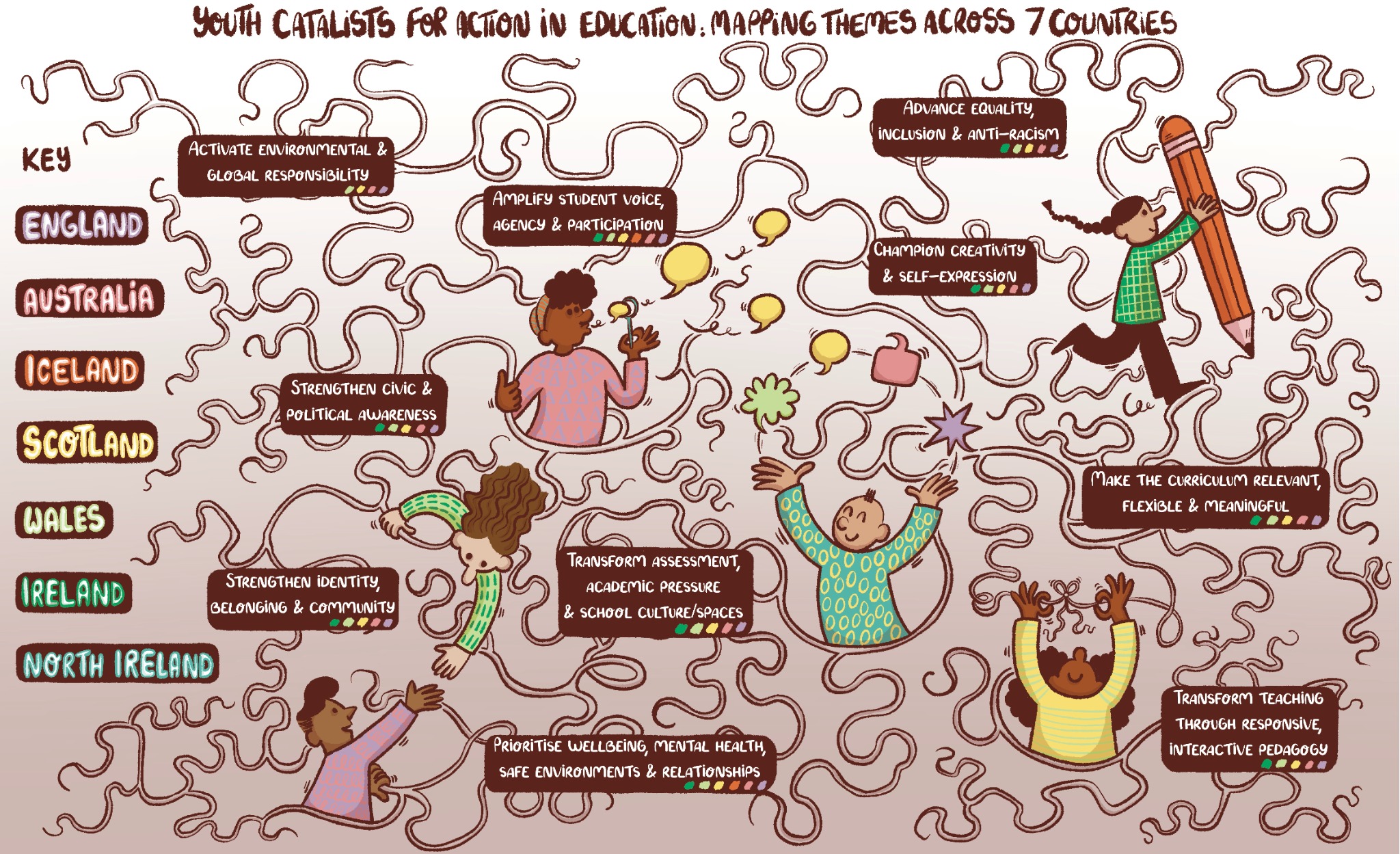

Youth voice
Lived experience and priorities
Seven countries · one shared inquiry
Empowering future teachers through collective creative pedagogies for social-emotional learning, inclusion and ethical action.
England · Wales · Scotland · Northern Ireland · Republic of Ireland · Australia · Iceland
01 — THE PROJECT
Across seven countries, young people, pre-service teachers, teacher educators, creative practitioners, researchers and policy partners are reimagining how teachers are prepared for a changing world.
Young people identify what needs to change. Their priorities shape creative pedagogical workshops and curriculum co-design, enabling future teachers to experience, test and reflect on more inclusive, relational and responsive approaches.
How the project works →02 — FOLLOW THE PROJECT
Move from the shared inquiry into country stories, youth catalysts, pedagogy and evidence of change.
Explore England, Wales, Scotland, Northern Ireland, the Republic of Ireland, Australia and Iceland. Each country brings together youth priorities, partners, pedagogical responses, ITE learning and emerging impact.
↗02Young people’s ideas are not an advisory extra. Co-participatory research makes them the starting point for curriculum and pedagogical change.
↗03Storytelling, drama, worldbuilding, creative writing, visual methods, outdoor learning and collective inquiry enable future teachers to experience inclusion and ethical dialogue through pedagogy.
↗04The project investigates how sustained creative experiences develop pre-service teachers’ creative identity, social-emotional understanding, confidence and professional agency.
↗03 — FROM VOICE TO ACTION
Lived experience and priorities
Co-designed encounters
Experience, reflection, rehearsal
Curriculum, practice and policy
04 — INTERNATIONAL CONTEXT
Initial teacher education is shaped by different policy, curriculum, standards and accountability conditions across the seven countries.
The project makes these conditions visible while examining gaps in research on creative pedagogies, teachers’ creative identity, social-emotional dispositions and professional agency.
Longitudinal research with children, teachers and schools underpins the work. It explores how collective creative pedagogy activates meta-affect—the ability to notice, interpret and reflect on feelings within individual and collective learning—and how this supports perspective-taking, responsible decision-making and ethical action.
Explore the research →05 — FUNDING & POLICY PARTNERS
Year 1 is co-funded by Arts Council of Wales and the Department for Education and Skills (DfES), Welsh Government.
Policy connections include Welsh Government, OECD and the Chartered College of Teaching.
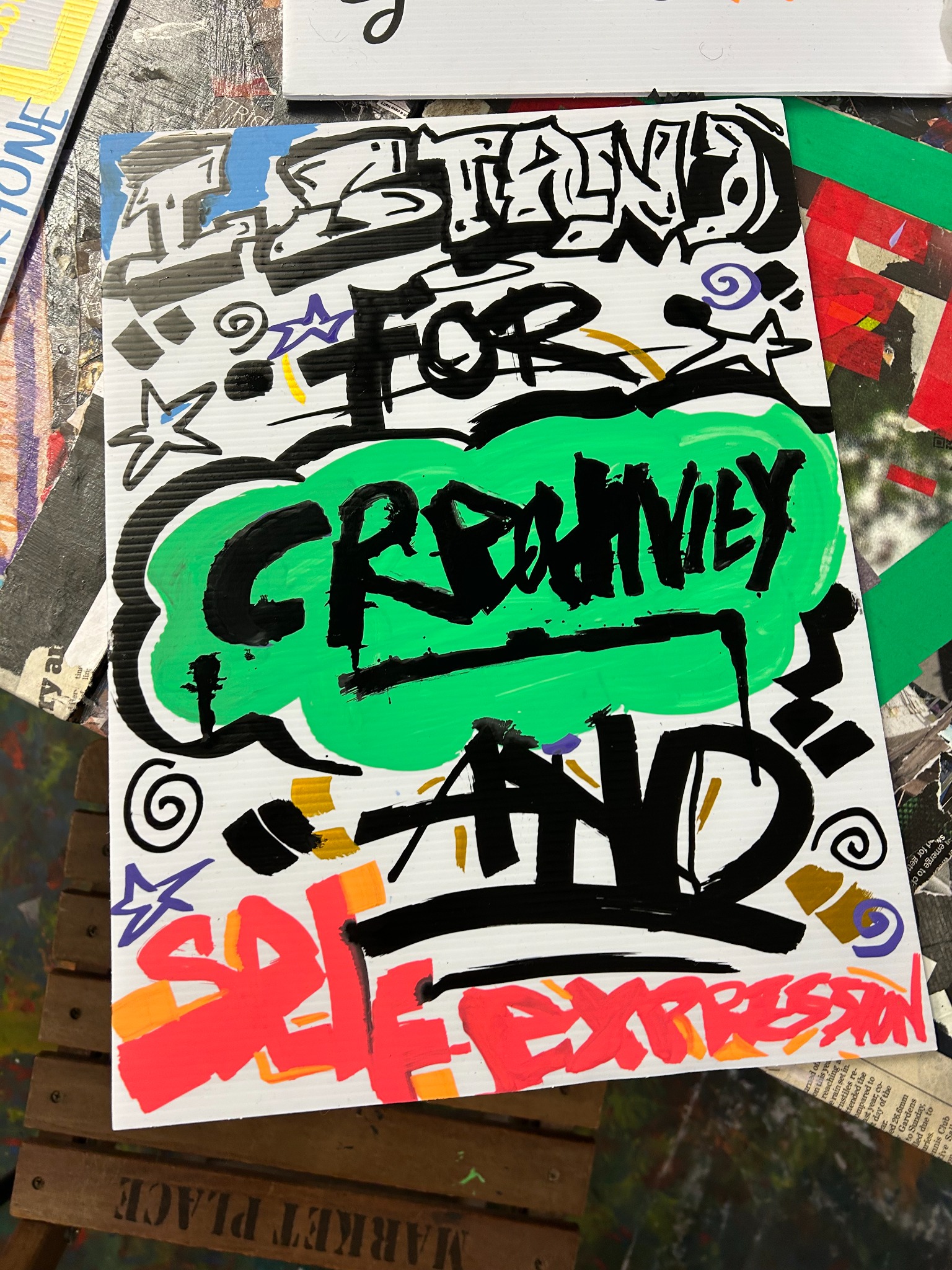
06 — CREATIVE PEDAGOGY IN ACTION
Experience. Reflect. Rehearse. Change.
Storytelling, drama, worldbuilding, creative writing, visual methods, outdoor learning and collective inquiry enable future teachers to experience new approaches as learners.
Explore pedagogical responses →