COUNTRY — AUSTRALIA
Australia: youth voice, creative pedagogy and teacher education
Curtin University · Dr Sonja Kuzich, Dr Paul Gardner and Dr Carol Carter. Locally responsive youth voice and teacher education.
 01
01Staff, university and country context
Curtin University. Project lead: Dr Sonja Kuzich, Dr Paul Gardner and Dr Carol Carter. The educational, policy and initial teacher education context will be developed with the country team, retaining local priorities and language.
Youth participation sessions
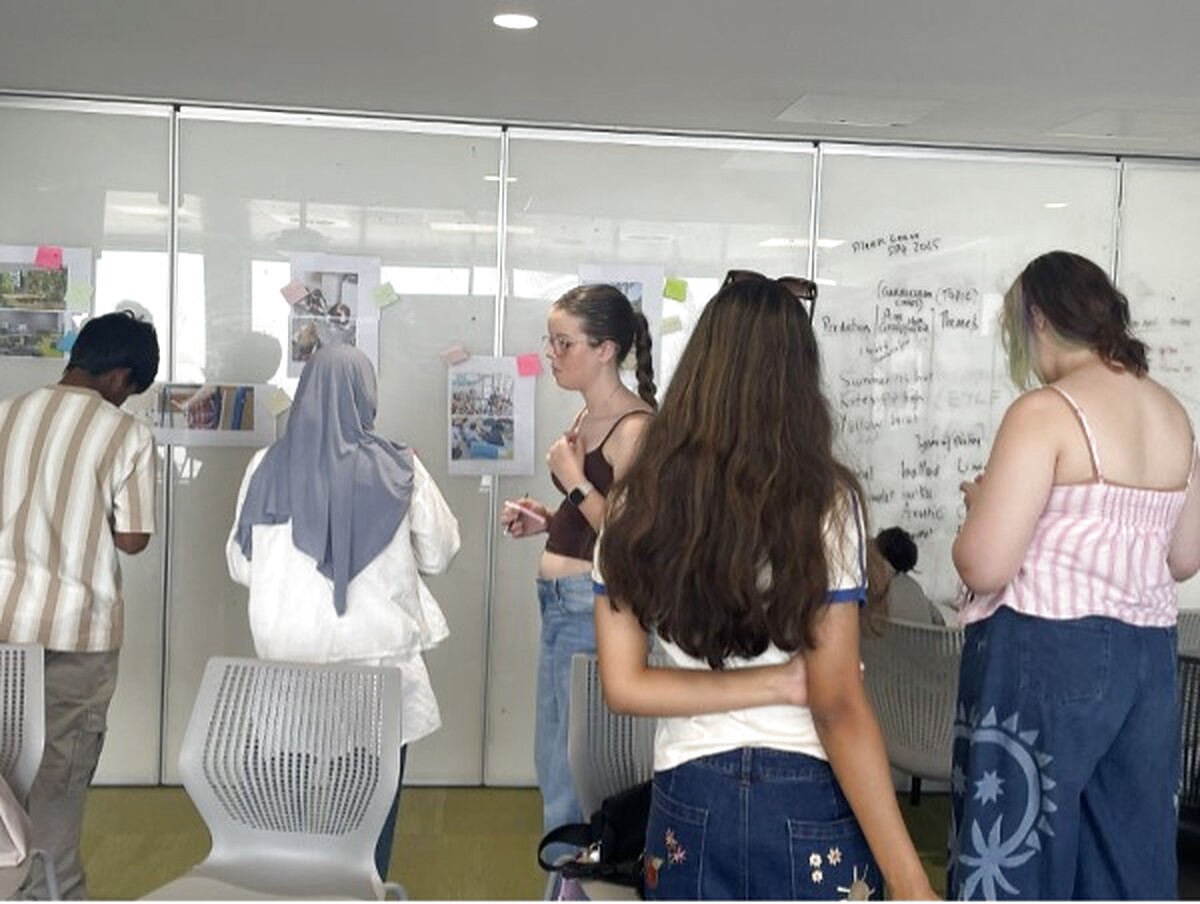
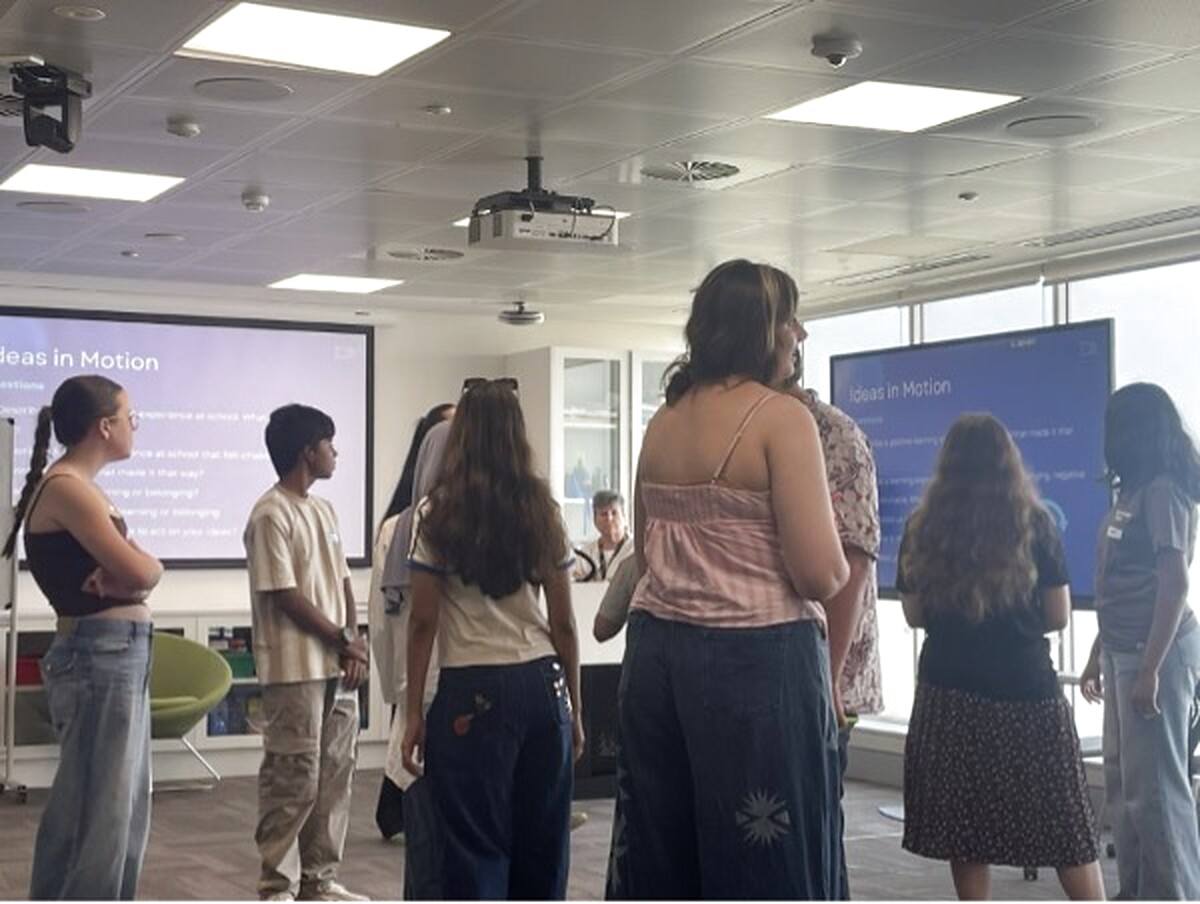
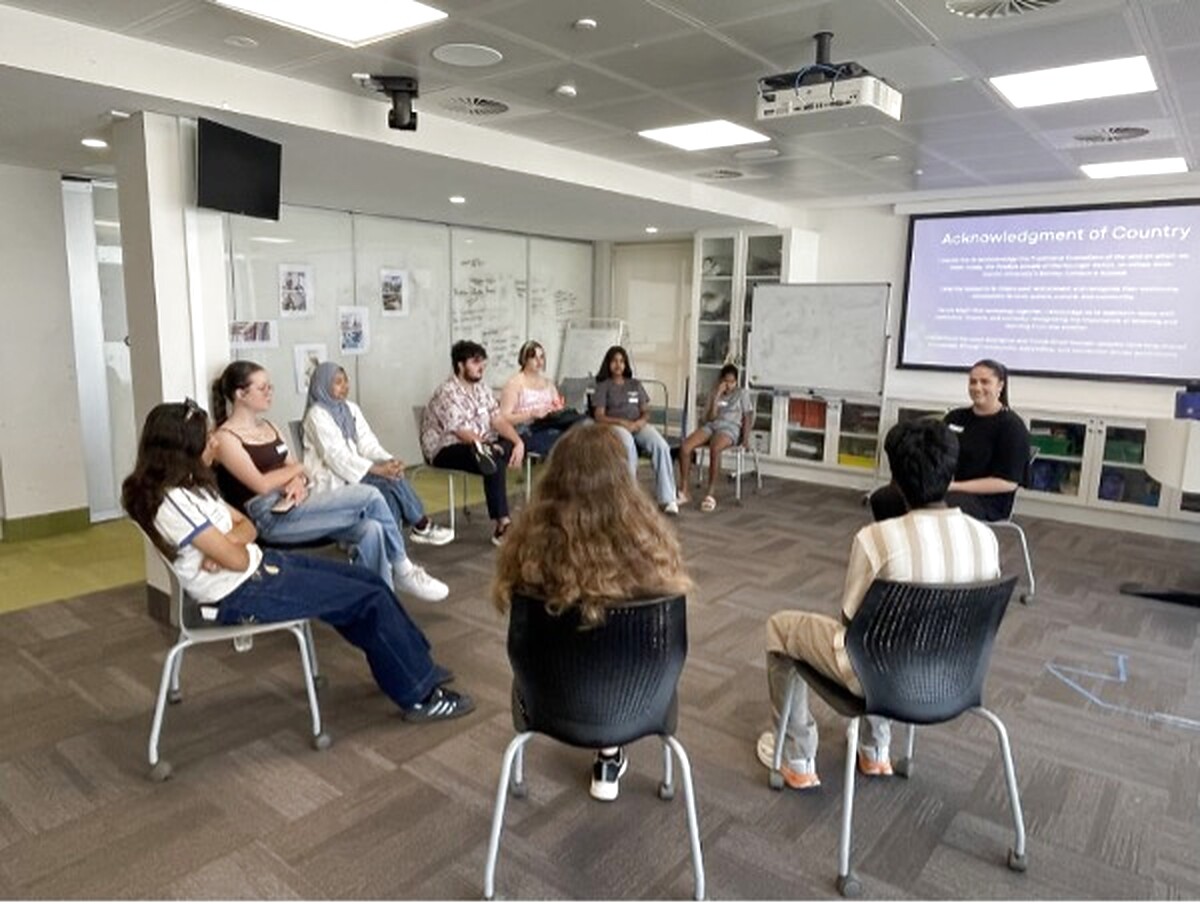
Nine Millennium Kids participants—seven girls and two boys, mainly aged 15–18—joined a youth workshop at Curtin University on 15 March. The session used icebreakers, a gallery walk, positioning activities, rapid paired discussion, a yarning circle, image theatre, an education-election exercise and ‘leaves of advice’ for future teachers. Young people emphasised engaged and adaptable teachers, supportive relationships, student voice, collaborative learning, inclusion and belonging, wellbeing, assessment pressure, global uncertainty and the ethical use of AI.
Youth priorities and youth voice
Participant groups, methods, consented youth evidence, photography and video are in progress.
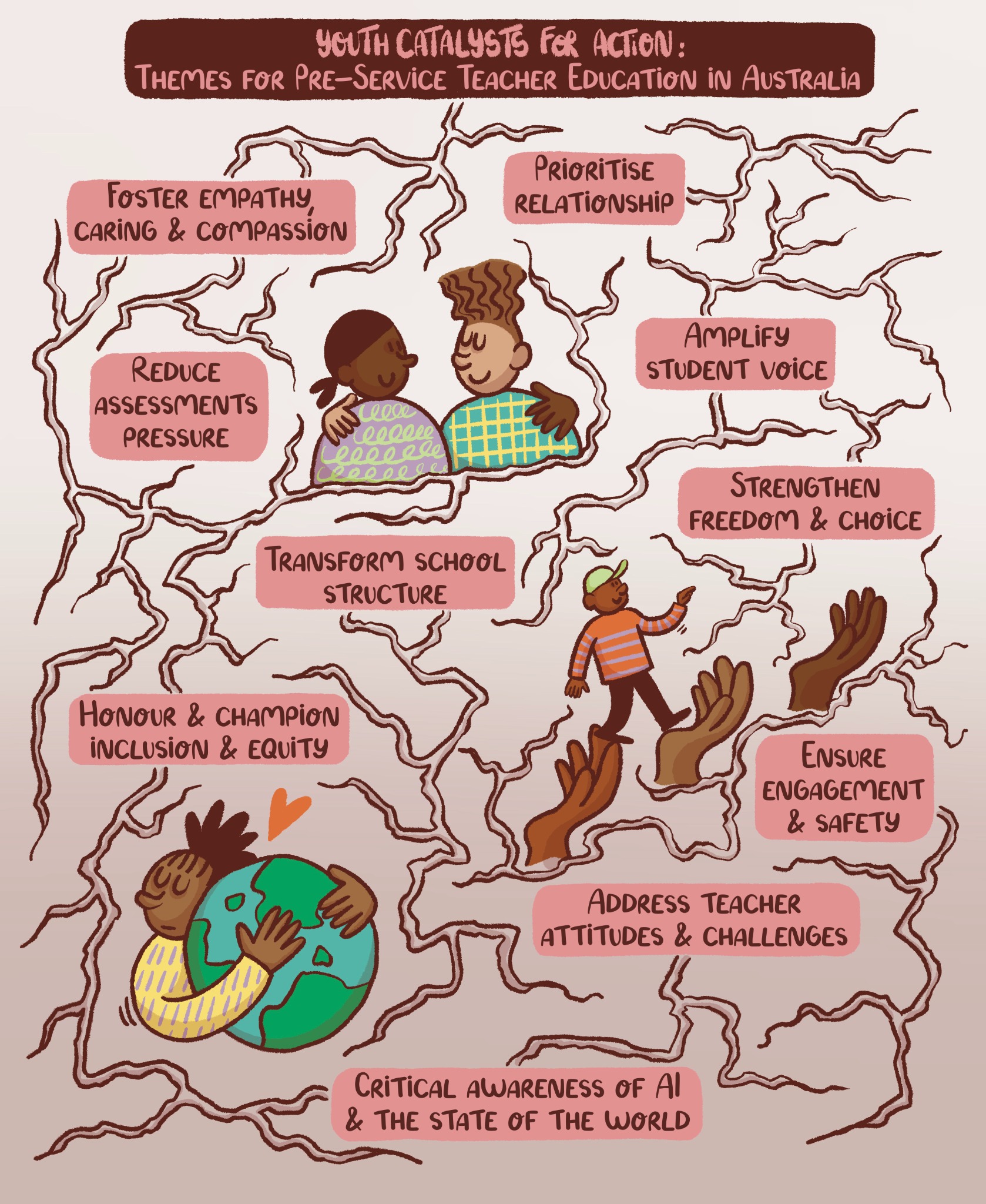
Australia Youth Catalysts illustration
05Youth Catalysts for Action
- Amplify student voice through meaningful choice and participation.
- Honour and champion inclusion, equity, diversity and culture.
- Ensure engagement and safety through caring, compassionate and responsive relationships.
- Make curriculum and assessment more relevant to life beyond examinations.
- Strengthen critical thinking about AI, information, global uncertainty and ethical action.
- Support collaboration, belonging and adaptive teaching that responds to different learners.
Partners
University partner: Curtin University. Creative practitioners, youth organisations, schools and policy partners will be added as confirmed.
Pedagogical response
The youth workshop combined gallery walks, an imaginary positioning line, rapid paired discussion, a yarning circle, image-theatre tableaux, an education-election activity and ‘leaves of advice’ for future teachers. These multimodal, drama-based and dialogic methods enabled participants to move between personal experience, collective interpretation and proposals for change.
ITE learning and voices
Youth evidence calls future teachers to notice disengagement, check in with learners, adapt teaching, model respectful behaviour and create supportive peer cultures. It also asks ITE to prepare teachers for assessment pressure, bullying, teacher turnover, critical media literacy and the ethical implications of AI—not only subject delivery.
What students said
Quotations, audio, film and creative artefacts will be added with consent and clear attribution.
Emerging impact
- Participants connected teacher engagement and adaptability with student wellbeing, motivation and belonging.
- Tableaux made classroom challenges and possible responses visible through collaborative, non-verbal problem-solving.
- The education-election and advice activities translated experience into recommendations for teacher education and policy.
- The session generated sticky notes, observation notes, audio, tableaux captions and collective discussion as complementary forms of evidence.
Research and resources
Methods, findings, publications and downloadable materials will be added with evidence status, language and attribution clearly labelled.